
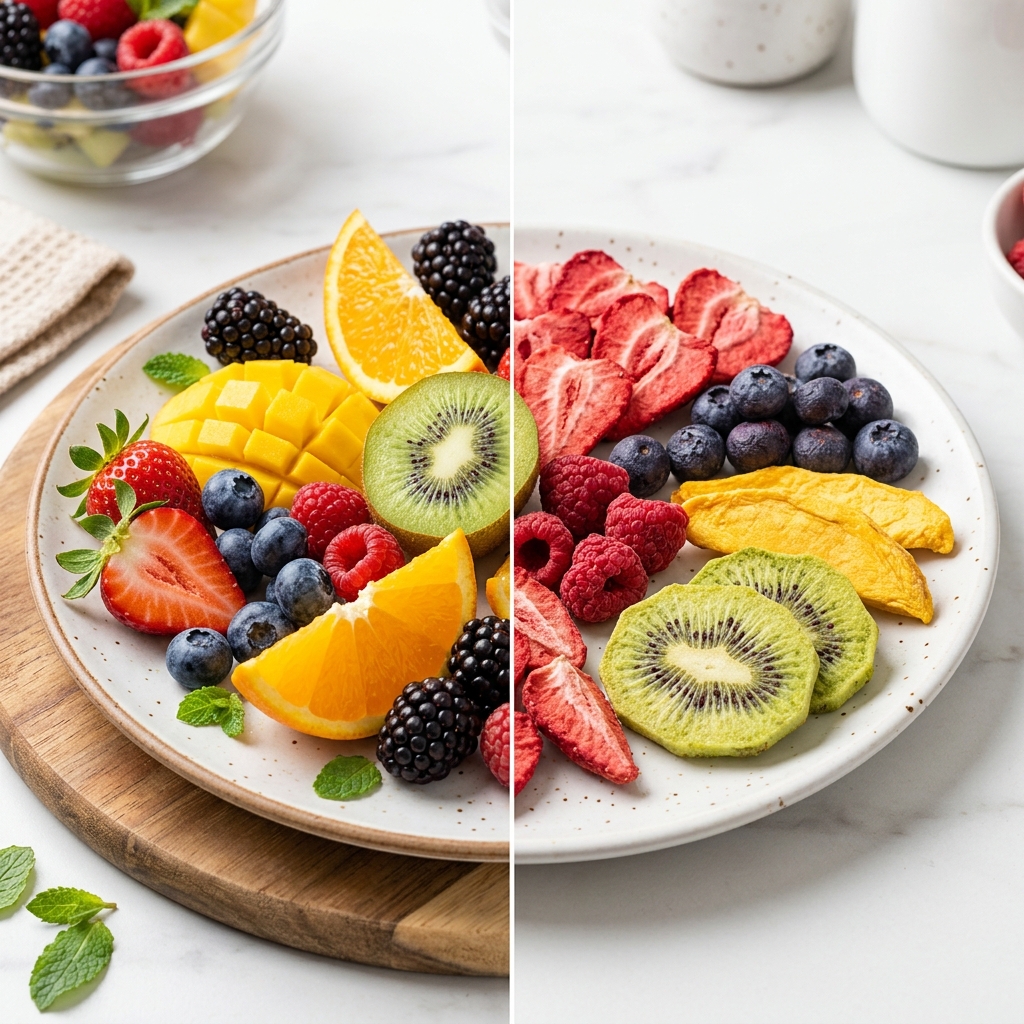
When sourcing dried herbs, fruits, and vegetables for food manufacturing, two primary processing methods are available: conventional dehydration (air drying) and freeze-drying (lyophilization). Understanding the difference is critical for product formulation and quality requirements.
Conventional Dehydration (Air Drying)
In this process, products are exposed to controlled heat and air circulation, reducing moisture content below 7%. This method is cost-effective and suitable for products where colour and texture changes are acceptable — such as onion powders, garlic powders, and spice blends.
Freeze-Drying (Lyophilization)
Lyophilization involves freezing the product and then sublimating ice directly to water vapour under vacuum. This preserves the cellular structure, colour, aroma, and up to 95% of nutritional content. The result is a product that rehydrates to near-fresh quality.
At Vedic Vistas Global, we offer both processing methods across our product range, allowing buyers to select the optimal form for their specific manufacturing requirements and price points.